
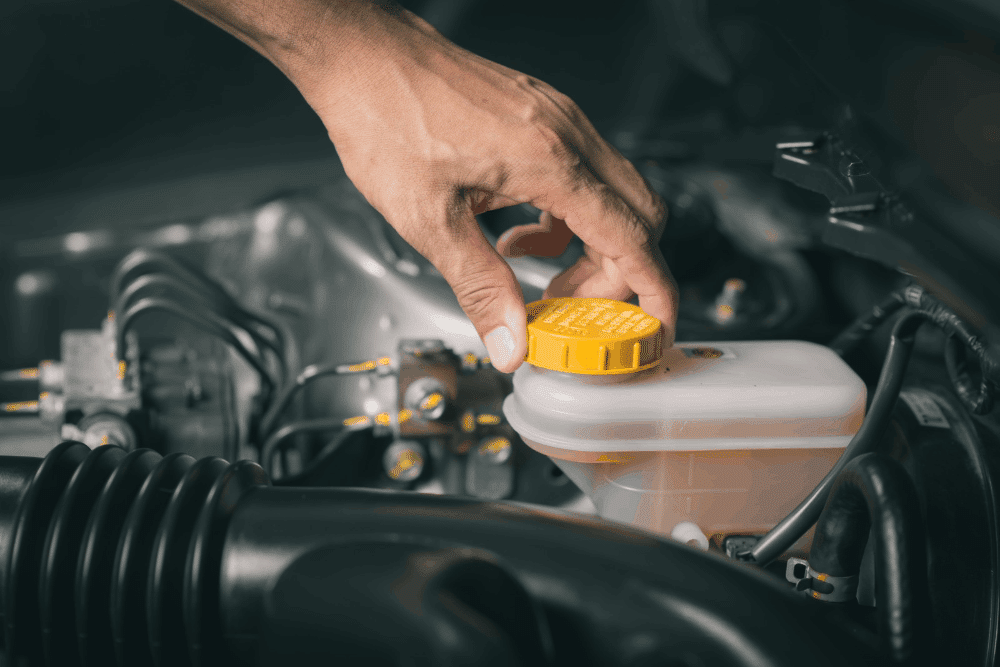
A brake fluid flush in Albuquerque can help restore a firm pedal when your BMW, Audi, VW, or Porsche starts braking softer than it used to. The culprit is often hiding in plain sight: the brake fluid itself. Brake fluid breaks down over time, and that change affects your pedal feel, your stopping power, and the parts it flows through, which makes it an easy maintenance item to overlook on Albuquerque roads. At Hans Wittler’s Automotive, our Northside team sees this exact issue on European vehicles across north Albuquerque, and understanding the “why” behind a brake fluid flush helps you make a smarter decision about when to get one.
What Brake Fluid Actually Does (and Why It Wears Out)
Brake fluid is the hydraulic muscle behind every stop you make. When you press the pedal, that fluid transfers force through the lines to the calipers, which squeeze the pads against the rotors. It’s a closed system, but it isn’t a sealed-forever system.
Here’s the part most drivers don’t know: brake fluid is hygroscopic, meaning it naturally attracts and absorbs moisture from the air over time. This happens slowly, through microscopic amounts of humidity that work their way in through rubber brake hoses, seals, and the reservoir cap, even on a vehicle that’s never been opened up.
European automakers typically specify DOT 4 fluid, which has a higher boiling point than DOT 3 when fresh. Like all glycol-based brake fluids, it still absorbs moisture over time, so it needs disciplined attention over the life of the car. That holds true for BMW brake fluid and for the fluid specs on Audi, VW, and Porsche models alike.
- Moisture content increases gradually with every year the fluid stays in the system
- Fresh DOT 4 fluid has a high boiling point; moisture-saturated fluid does not
- Contaminated fluid also invites internal corrosion in calipers, lines, and ABS components
Why a Lower Boiling Point Is a Real Safety Concern for Albuquerque Drivers
Every time you brake, friction turns into heat, and that heat transfers into the fluid inside your calipers. Fresh fluid can handle that heat without issue. Moisture-laden fluid can’t.
As water content rises, the fluid’s boiling point drops. Push it hard enough, on a long downhill grade or during aggressive stop-and-go driving, and the fluid can actually boil. Boiling fluid creates vapor, and vapor compresses instead of transferring force, which means you can press the pedal and get less braking than you expect, right when you need it most.
This matters for Albuquerque drivers more than people realize. A few local conditions put repeated heat cycles into your brakes without you noticing:
- Long downhill grades, where you’re on the brakes for minutes at a time
- Heavy stop-and-go traffic, where pads and fluid never get a chance to cool
- Hot summer days, when the whole brake system starts out warmer
None of this is dramatic on its own, but it’s exactly the kind of driving that accelerates fluid breakdown over time.
Spongy Brake Pedal: What Moisture and Air Do to Your Pedal Feel
A spongy brake pedal is one of the clearest signs that something has changed inside your brake system. Instead of a firm, predictable response, the pedal feels soft, or you need to press further down than usual before the car actually slows.
This happens because hydraulic systems rely on fluid being incompressible. Air is compressible. Once moisture in old fluid starts to vaporize under heat, or once air works its way into the lines through worn seals, that pedal firmness disappears.
- A pedal that sinks under steady pressure, which can also point to a master cylinder or leak problem that needs immediate attention
- A pedal that feels different after a long highway drive or a hard stop
- A need to pump the brakes to regain firm pressure
None of these symptoms are something to wait out. A spongy pedal is your brake system telling you the fluid or the seals need attention. If your pedal feels soft or sinks under steady pressure, schedule a brake inspection with our team before your next long drive.
Protecting ABS and Electronic Components from Corrosion
European vehicles don’t just rely on fluid and friction. They rely on a network of sensors, valves, and electronics that manage ABS and, on many newer models, ADAS-linked braking functions (ADAS, or advanced driver-assistance systems, includes features like automatic emergency braking). That hydraulic system runs directly through components that were never designed to sit in moisture-contaminated fluid.
Over years of neglect, moisture can quietly corrode internal surfaces throughout the brake system. The components most at risk include:
- The ABS module’s internal valves and solenoids
- Steel brake lines, where corrosion can develop from the inside out
- Caliper pistons and bores, where pitting leads to sticking or uneven braking
- Brake pressure sensors inside the ABS and stability control unit, which ADAS braking features on newer vehicles rely on
Replacing electronics like these is a far more expensive problem than a routine fluid service. Preventive maintenance exists for exactly this reason: a flush is a small, predictable step compared to replacing corroded brake components.
How Often Should You Flush Brake Fluid?
Manufacturer-recommended intervals vary by brand and by model year, so your owner’s manual is the most accurate source for your specific vehicle. What stays consistent across European makes is the underlying reason for the service: fluid degrades on a schedule, whether or not your brakes feel different yet.
Because moisture contamination happens gradually and isn’t something you can see with the naked eye, many drivers don’t realize their fluid needs attention until the pedal feel has already changed. A typical brake fluid flush generally includes:
- Testing the fluid’s moisture content and condition before starting
- Draining the old, contaminated fluid from the system
- Refilling with fresh, manufacturer-approved fluid
- Bleeding the lines to remove any trapped air
Timing Your Flush Around Albuquerque Driving Conditions
North Albuquerque’s seasonal traffic patterns give drivers a natural reminder to think about brake maintenance. A few local hotspots put extra stress on your brake system throughout the year:
- Balloon Fiesta week, when heavy, slow-moving congestion fills the I-25, Alameda, and Paseo del Norte corridors right near Balloon Fiesta Park
- Daily commutes from Bernalillo, about 7 miles north on I-25, and from Rio Rancho via Alameda or Paseo del Norte, with repeated stop-and-go patterns
- School-zone traffic near La Cueva High School, Desert Ridge Middle School, and North Star Elementary
- Road trips north toward Santa Fe or into the mountains, where sustained braking on grades adds heat that fresh fluid handles far better than old fluid
A full pre-trip inspection covers more than brakes alone, but fluid condition is one of the first things worth confirming before a long highway drive.
If you’re near any of those north Albuquerque landmarks, our Northside location at 5701 Wilshire Ave NE, Albuquerque, NM 87113 is just off I-25 and Alameda, east of Balloon Fiesta Park. You can reach us at (505) 294-7684 to schedule a fluid check or a full inspection.
What Sets Our Brake Fluid Flush Service Apart
We’ve spent more than 50 years working on German and European vehicles in Albuquerque, and brake systems are one of the areas where precision matters most. Our team understands that a BMW or Porsche brake system isn’t built or maintained like a mass-market vehicle, and we treat every fluid service with that level of care.
- BMW and Audi Master Technicians: Our certified techs bring dealership-level expertise to every brake and fluid service, without the dealership experience.
- ShopWare Digital Inspections: We perform digital vehicle inspections that document fluid condition and brake wear with photos and technician notes, so you see exactly what we see.
- Factory Scan Tools: We use name-brand factory scan tools for every make we work on, including the ABS systems on European vehicles.
- 3-Year/36,000-Mile Warranty: Every brake fluid flush and brake service we perform is backed by our 3-year/36,000-mile warranty.
- Loaner Cars and Local Shuttle: If a brake repair will take more than a few hours, we provide a loaner vehicle at no extra cost. For shorter visits, our local shuttle can get you where you need to go.
We’ve built our reputation on genuine relationships and exceptional auto care, and that starts with explaining the “why” behind every recommendation we make.
FAQs About Brake Fluid Flush in Albuquerque
How often should brake fluid be changed?
Brake fluid change intervals vary by manufacturer, so your owner’s manual is the best guide for your specific European vehicle. Our team at Hans Wittler’s Automotive can check your fluid’s condition during a maintenance visit.
What happens if you never change brake fluid?
Fluid that’s never flushed absorbs moisture over time, which lowers its boiling point and can lead to a spongy pedal, reduced stopping power under heat, and corrosion inside brake lines and ABS components. Neglected fluid can turn a simple flush into a costly repair.
How do I know if my brake fluid is bad?
Common signs include a soft or spongy pedal or a fluid test showing high moisture. A pedal that sinks under steady pressure can also mean a leak or master cylinder issue, so have our team inspect it right away.
Is a brake fluid flush necessary?
Yes. Brake fluid absorbs moisture over time, which lowers its boiling point and can corrode internal brake parts. Following your manufacturer’s interval keeps pedal feel firm and protects ABS components.
Can old brake fluid cause a spongy brake pedal?
Yes. Moisture in old fluid can vaporize under heat, and air can enter through worn seals, both of which make the pedal feel soft. Contact us to schedule a brake inspection and we will walk you through the process.
Keep Your Pedal Firm: Book Your Brake Fluid Flush in Albuquerque at Hans Wittler's Automotive
Brake fluid breaks down quietly, but the consequences show up exactly when you need firm, confident braking the most. Staying ahead of moisture buildup with a timely flush protects your pedal feel, your ABS components, and your overall safety on the road.
Call Hans Wittler’s Automotive or visit either of our locations to schedule brake fluid service near Albuquerque:

